
Field marks · 5 min
Carpenter-ant frass: what the evidence can tell you
How to examine a suspicious pile without confusing excavated wood, termite pellets and ordinary household debris.
Field marks
Use anatomy, scale, behavior and place to move from a vague sighting toward a defensible identification.
How to examine a suspicious pile without confusing excavated wood, termite pellets and ordinary household debris.
“Sugar ant” can mean different ants in different places, so the useful answer begins with identification rather than the nickname.
Carpenter ant is a biological group; “black ant” is usually a color description. Here is how to compare the clues that matter.
Both can be associated with damaged wood, but their bodies, galleries and debris tell different stories.
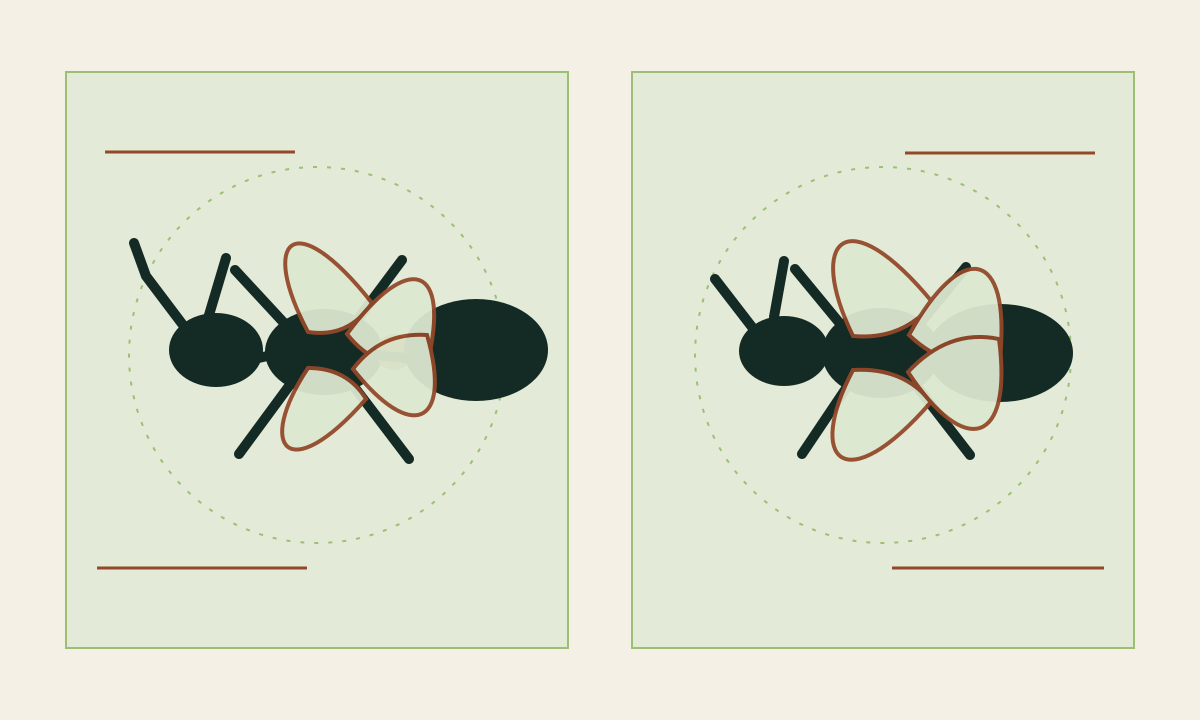
Compare waist, antennae, wings and context before a fragile specimen—or an important structural clue—disappears.
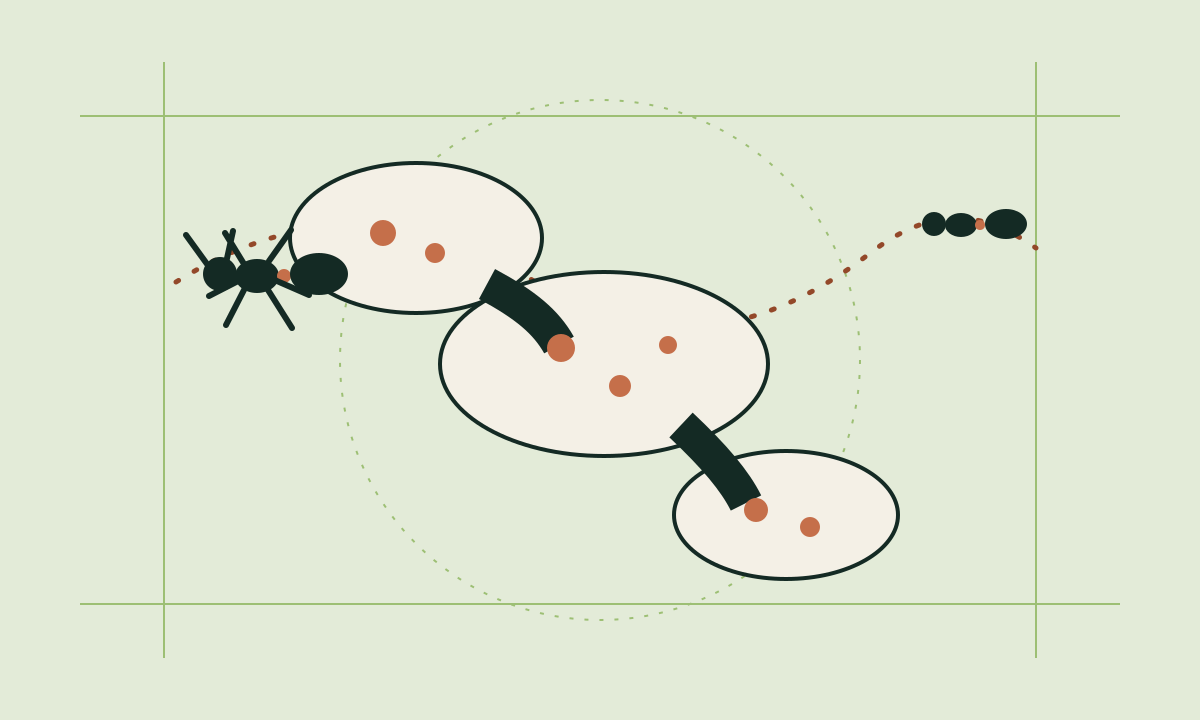
Identification, nesting evidence and structural questions—organized without treating every large black ant as the same insect.
Why ants grow wings, how seasonal swarms work and when winged insects indoors become a building question.
A regional name that can describe a particular Australian ant—or several unrelated sweet-feeding ants in North America.