Begin with evidence
Large size, elbowed antennae, a single waist node and a smoothly rounded upper body can support a carpenter-ant identification. Color alone cannot: carpenter ants may be black, red, brown or mixed.
Follow the specific question
Use the frass guide for debris, the black-ant comparison for body clues, and the termite comparison when structural wood or swarmers are involved. Each child guide owns its answer; this hub connects them.
Do not miss the moisture problem
Indoor nesting often intersects leaks or damaged wood. Identifying the ant is only one part of the inspection; moisture and the condition of the material also need attention.
A carpenter ant is not automatically a house problem
Camponotus is a diverse genus, and carpenter ants are ordinary members of forests, gardens and other habitats. They nest in wood or cavities and forage for varied foods; they do not exist chiefly to inconvenience property owners.
A worker on a patio or tree belongs in that ecological context unless evidence connects it to a structure. Even an indoor forager may have walked from an outdoor nest. Repeated emergence from wood, fresh debris, moisture and nighttime trails make the building question more specific.
Main nests and satellite sites
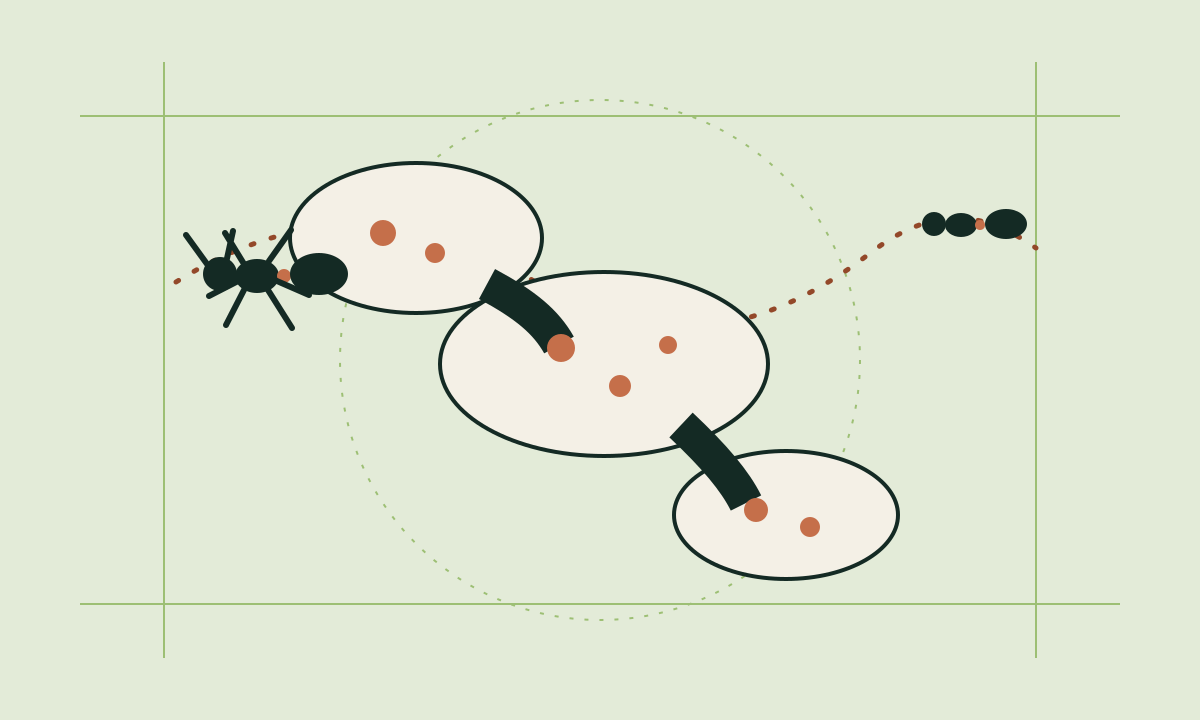
A mature colony can use an outdoor main nest and one or more satellite sites. Satellites may contain workers, older brood or winged reproductives without the queen. This arrangement explains why treating one visible indoor pocket may not resolve the wider colony.
Follow trails rather than assuming the nest sits directly behind the first ant. Trees, stumps, fence posts and firewood can connect to a building through branches, pipes and utility lines. The carpenter-ant investigation is often a map before it is a treatment.
Use this hub as a decision map
Start with frass when debris is the main clue. Use the black-ant comparison when color and size are driving the question. Choose the termite comparison when wood condition, galleries or non-winged insects are involved, and the flying-ant guide when intact swarmers are available.
Each guide deliberately stops where a web page should stop. An intact specimen can support identification; concealed structural conditions require an on-site inspection. EveryAnt would rather leave one honest question open than close it with an impressive but imaginary answer.
Sources and review notes
EveryAnt prioritizes peer-reviewed, university, museum and government sources. These pages have completed an internal source and scope pass; independent subject-matter review remains recommended before a production launch.
- Carpenter Ants — University of Maryland Extension. Accessed 2026-09-05.
- Carpenter Ants — University of California Statewide IPM Program. Accessed 2026-09-05.