
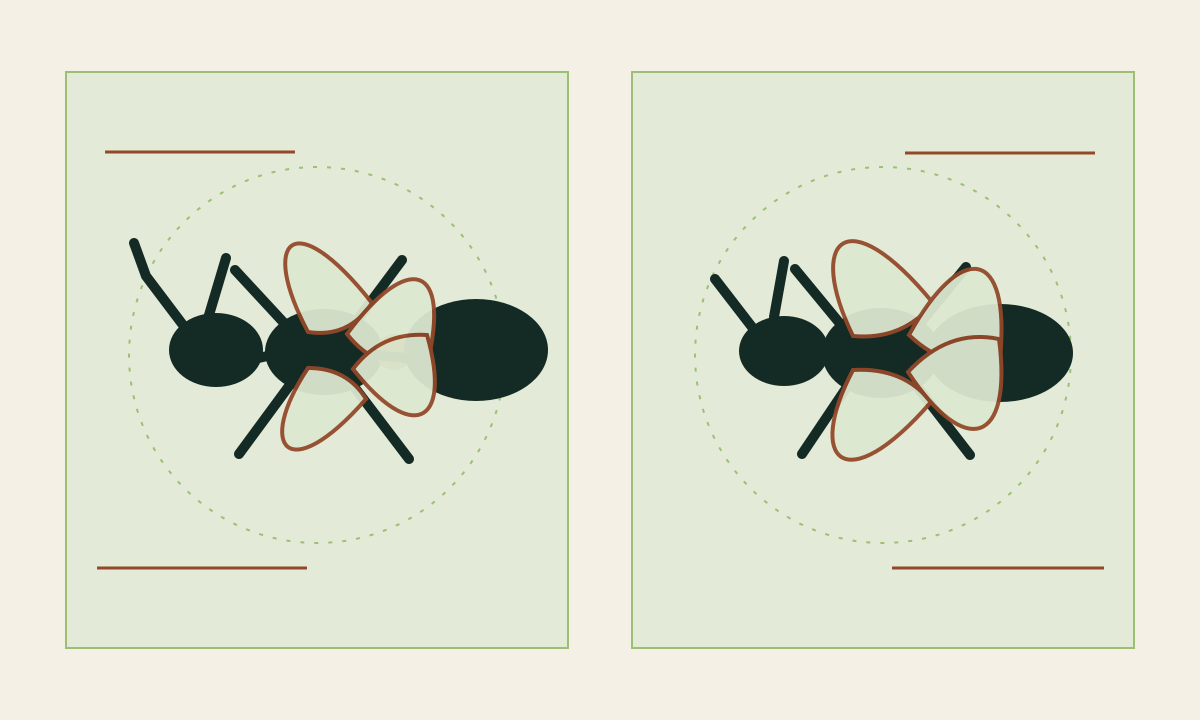
Frass is an excavation clue
Carpenter ants do not digest wood. They remove it to create smooth galleries, then carry or push the waste out through small openings. The resulting pile is commonly called frass even though it is not simply feces.
Because the material comes from a working nest, a recurring fresh pile is more informative than old dust found once. Note the exact location before cleaning it up, then check whether new material appears.
What to look for
Carpenter-ant debris can look coarse and irregular, with shavings, splinters, soil and fragments of dead insects mixed together. Its color usually reflects the wood being excavated rather than the ant.
Look above the pile for a slit, crack or small opening. Moisture-damaged areas around windows, roofs, plumbing and decks deserve attention. Do not enlarge the opening or disturb structural material merely to chase the trail.
How termite evidence differs
Drywood termites can eject hard, similarly sized fecal pellets. Those pellets are more uniform than the mixed shavings associated with carpenter ants. Subterranean termites more often leave mud tubes and soil-lined galleries rather than a clean sawdust pile.
Real samples do not always match a perfect comparison chart. Building material, moisture and other wood-boring insects create lookalikes. Identification should combine debris, insect body features and the pattern inside the wood.
Document before you clean
Photograph the pile in place with a scale such as a ruler or coin, then take a close image of individual particles. Save a few intact insects or wings in a sealed container if they are present. Record when and how quickly the pile returns.
Those details help an extension specialist or pest professional distinguish ongoing excavation from old construction dust. A distant phone photo of a brown pile rarely provides enough evidence by itself.
When to call for an inspection
Seek qualified inspection when frass repeatedly returns, large ants emerge from structural wood, activity is heard in a wall, or the area is visibly damp or damaged. Carpenter-ant activity may point to a moisture problem that needs repair as well as pest management.
Avoid treating an unidentified opening with a random spray. Repellents can scatter visible workers without reaching the nest, and pesticide use must follow the product label and local rules.
What frass can—and cannot—tell you
A fresh recurring pile supports the idea that something is actively moving or producing material nearby. Mixed fibrous shavings with insect fragments are consistent with carpenter-ant excavation. That is useful evidence, but it does not reveal colony size, prove that the main nest is in the building or measure structural damage.
Workers may clean material from a satellite nest while the queen and much of the colony remain outdoors. Conversely, a small pile can sit below an important timber. Treat volume as a reason to investigate, not a convenient conversion chart from teaspoons of sawdust to number of ants.
Read the particles before naming the pest
Spread a small sample on white paper and use bright side lighting or a hand lens. Carpenter-ant material is usually irregular: fibrous wood, chips of different sizes, soil, dead ants or pieces of prey may be mixed together. Drywood-termite pellets tend to be harder and much more uniform.
Powder-fine dust can point toward other wood-boring insects or ordinary abrasion, while construction debris may include plaster, insulation or machine-cut sawdust. Real buildings are messy evidence scenes. The most confident answer may be “active debris of uncertain source” until an insect or gallery is found.
- Photograph the pile before moving it.
- Include a ruler and the opening above it.
- Keep a dry sample and any intact insects separately.
- Record whether material returns after careful cleanup.
The opening matters as much as the pile
Frass falls, bounces and can be moved by air, cleaning or vibration. Look directly above and around the material for a slit, joint, crack or kick-out opening. Window frames, roof edges, plumbing penetrations and wood touching masonry deserve special attention because moisture often concentrates there.
Do not assume the closest hole is responsible. Follow the vertical line, examine ledges and consider airflow. An ant can also carry debris some distance before dropping it. In other words, the pile is a clue with an address problem.
Map moisture and activity together
Carpenter ants often begin in softened, damp or previously decayed wood and may later extend galleries into sound material. Check for staining, condensation, roof or plumbing leaks and poorly ventilated voids. Repairing moisture removes a condition that favored nesting, although it does not automatically remove an established colony.
Observe after dark when carpenter-ant foraging is often easier to see. A loose trail between a building and a tree, stump, firewood stack or fence can reveal the relationship between outdoor main nests and indoor satellite sites. Keep firewood off the ground and away from the structure rather than inviting it to lean against the wall like an insect footbridge.
Sources and review notes
EveryAnt prioritizes peer-reviewed, university, museum and government sources. These pages have completed an internal source and scope pass; independent subject-matter review remains recommended before a production launch.
- Carpenter ant: Frass — University of California Statewide IPM Program. Accessed 2026-09-05.
- Carpenter Ants — University of Maryland Extension. Accessed 2026-09-05.
- Carpenter Ants — University of California Statewide IPM Program. Accessed 2026-09-05.