
The fastest body comparison
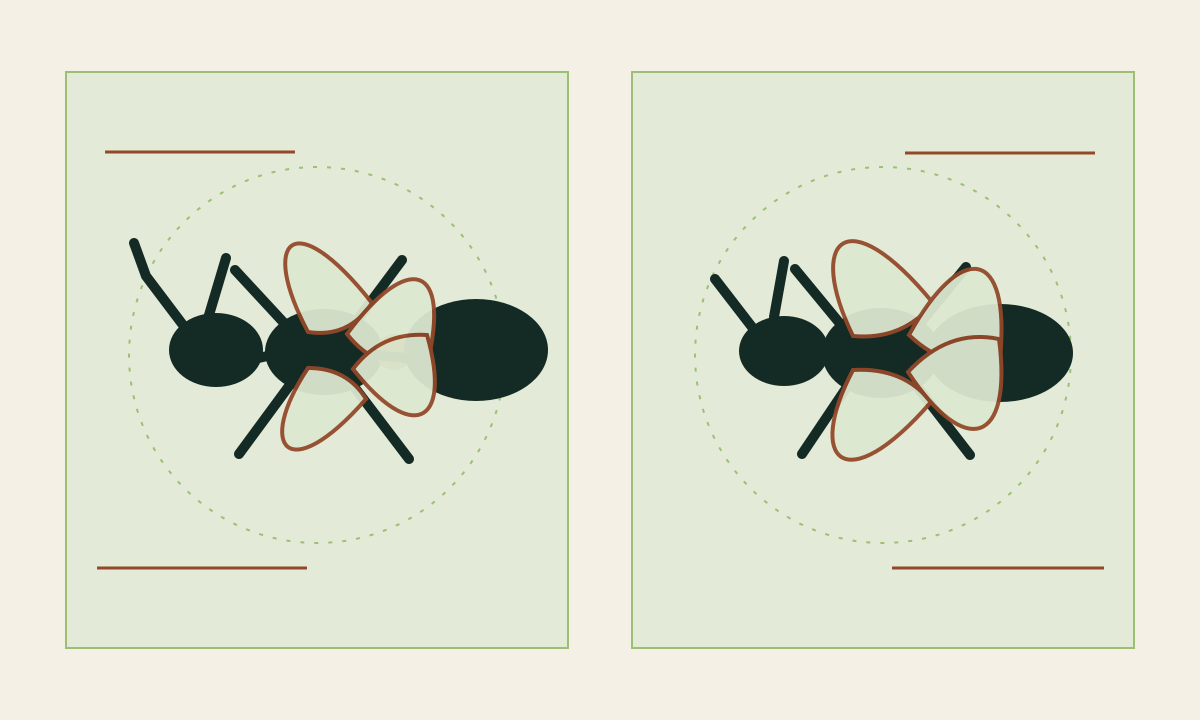
On an intact winged insect, start with three traits. Ant antennae are elbowed, the waist is visibly constricted, and the front wings are longer than the hind wings. Termite swarmers have straighter antennae, a broad connection between body regions and two pairs of wings that are similar in length.
Use several traits together. A broken wing or awkward viewing angle can make one clue disappear, and color varies among species and castes.
What each insect does with wood
Carpenter ants remove wood to build galleries; they eat other insects and varied food rather than cellulose. Their tunnels are often smooth and kept relatively clean.
Termites feed on cellulose with the help of gut microbes. Subterranean termites maintain humid, soil-connected conditions and may line activity areas with soil. Drywood termites can leave uniform fecal pellets. These differences affect both evidence and treatment.
Debris and discarded wings
A mixed pile of shavings, insect fragments and debris below an opening supports carpenter-ant excavation. Repeated piles of uniform pellets are more consistent with drywood termites. Mud tubes are an important subterranean-termite clue.
Shed wings show that reproductives were present but need close comparison. Collect a few without crushing them and photograph where they were found. Wings alone do not reveal how extensive an infestation may be.
Moisture connects many cases
Carpenter ants commonly establish nests in damp or previously damaged wood. Termite risk also varies with moisture, soil contact, construction and region. Fixing leaks is valuable, but it does not replace inspection of existing activity.
Do not tear into structural wood solely for identification. Disturbance can remove evidence and cause unnecessary damage.
When uncertainty is expensive
Indoor swarmers, recurring frass, mud tubes, soft wood or activity emerging from a structural element are reasons to seek a qualified wood-destroying-insect inspection. Bring specimens and photographs if possible.
Avoid relying on a single internet photograph or treating both insects with the same product. Correct identification determines the scope of inspection and the lawful, effective options available in your location.
Separate the insect question from the building question
First ask what insect produced the evidence. Then ask what the evidence means for the material. A correct carpenter-ant identification does not quantify damage, and identifying a termite swarmer does not show where or how far a colony has affected the structure.
The two questions require different evidence. Anatomy can distinguish an intact insect; moisture readings, probing, construction knowledge and access to concealed areas help assess a building. A sharp macro photograph is valuable, but it has not yet learned to inspect a sill plate.
Gallery architecture records behavior
Carpenter ants mechanically remove wood and carry waste away, producing galleries that are often smooth, clean and shaped by the grain. Mixed shavings and insect fragments may accumulate outside an opening. Termites consume cellulose and maintain conditions suited to their bodies and symbiotic digestion.
Subterranean-termite activity often includes soil or mud in shelter tubes and galleries. Drywood termites live without soil contact and can eject hard, similarly shaped fecal pellets. Those are different termite systems, which is why “termites leave mud” is not a universal rule.
Swarmers answer a different part of the puzzle
Winged ants and termites are reproductive forms leaving established colonies. An outdoor seasonal flight may originate from the wider landscape. Numerous swarmers emerging from one indoor trim joint or wall opening are more directly connected to the building and deserve documentation.
Save multiple specimens because wings break easily and one may be atypical or damaged. Ant forewings are longer than hind wings; termite wing pairs are roughly equal. Ants have a pinched waist and elbowed antennae, while termite bodies look broad-waisted with straighter, bead-like antennae. Use all three traits together.
Prepare for an inspection instead of preparing a verdict
Do not spray, seal, vacuum or dismantle every clue before the inspector arrives. Mark recurring debris locations, photograph emergence points, keep specimens dry and record dates, weather and time. Note leaks, renovations and where wood contacts soil or masonry.
Ask the inspector to identify the insect, describe the evidence used, distinguish active from old signs where possible and explain the proposed treatment or repair scope. A useful inspection reduces uncertainty. It should not require you to arrive with a courtroom speech titled “The Termite Did It.”
- Keep wings and insects in a rigid container rather than on adhesive tape.
- Photograph damage before disturbing it.
- Record whether debris returns after cleaning.
- Address water intrusion regardless of which insect is present.
Sources and review notes
EveryAnt prioritizes peer-reviewed, university, museum and government sources. These pages have completed an internal source and scope pass; independent subject-matter review remains recommended before a production launch.
- Ants and Termites: How to Tell the Difference — University of Maryland Extension. Accessed 2026-09-05.
- Carpenter ant: Frass — University of California Statewide IPM Program. Accessed 2026-09-05.
- Carpenter Ants — University of Maryland Extension. Accessed 2026-09-05.
- Carpenter Ants — University of California Statewide IPM Program. Accessed 2026-09-05.