
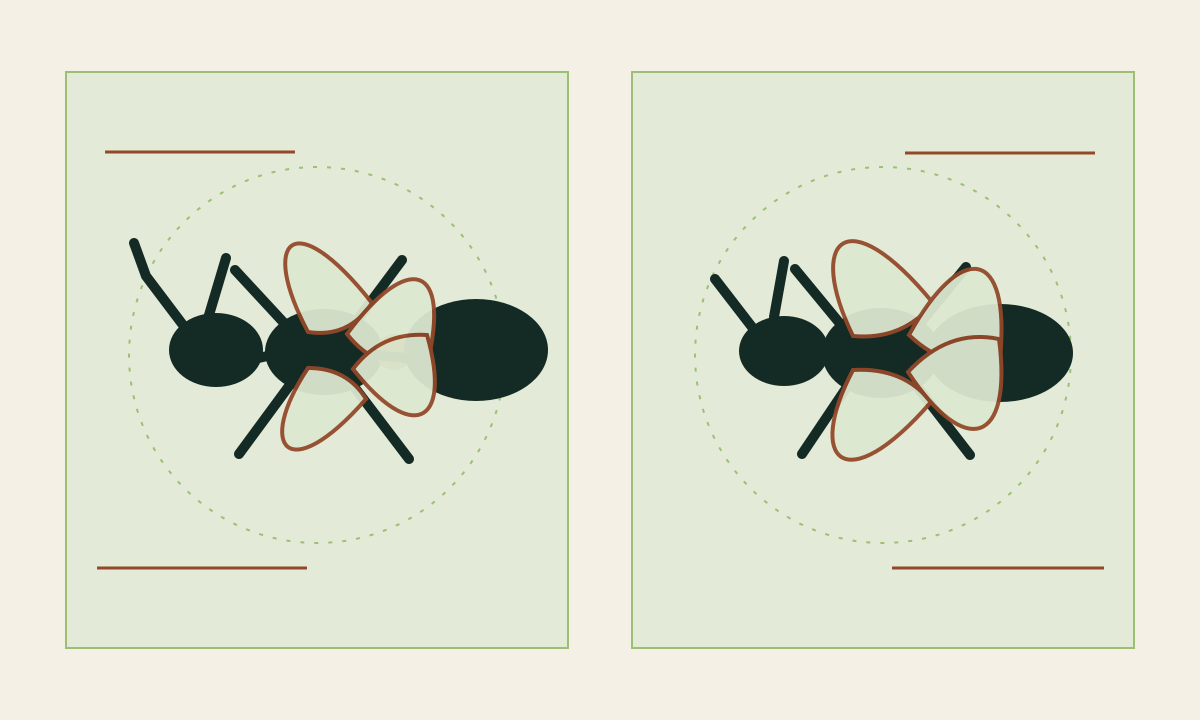
Check the waist
An ant’s body narrows sharply between the middle section and abdomen. A termite swarmer has a much broader, more continuous-looking waist. This is often the easiest feature to see in a clear top-down photograph.
Do not judge a crushed or curled specimen from silhouette alone. Wing position can cover the waist, and phone processing may blur the narrow connection.
Check the antennae
Ant antennae have a distinct elbow after a long first segment. Termite antennae look straighter and are built from bead-like segments.
The feature is small, so use close focus and side lighting. Two dark lines on a blurry head are not enough for a confident identification.
Compare both pairs of wings
A flying ant’s forewings are longer than its hind wings. A termite swarmer’s four wings are approximately equal in length and often extend well past the body.
Swarmers shed wings, and loose piles can become mixed. Whenever possible, photograph an insect with all four wings still attached and keep a specimen in a small sealed container.
Read the location and timing
Both groups produce winged reproductives that leave established colonies to mate. A swarm outside may be a seasonal event. Repeated insects emerging indoors, especially from one structural point, suggest a colony in or very close to the building.
Discarded equal-length wings, mud tubes, damaged wood, frass or moisture add context. None should be interpreted from one photograph without considering regional species.
What to do next
Vacuum loose swarmers if needed, save several intact specimens and document the emergence point. Do not seal an active structural opening until it has been assessed; you may hide useful evidence without resolving the colony.
Arrange a qualified inspection for a suspected termite swarm or repeated winged ants associated with wood. A correct identification matters because ants and termites require different investigations and management.
Why both insects seem to appear from nowhere
Ant and termite colonies invest in winged reproductives when they are mature enough and environmental conditions favor flight. Temperature, humidity, rain and wind can synchronize emergence across many nearby colonies. The result can look sudden because the quiet colony was present long before the visible swarm.
A swarmer is not a worker that grew wings overnight. It developed as a reproductive. Its job is dispersal and mating, not routine nest labor. This shared life-history moment explains why ants and termites so often arrive in the same panicked search query despite belonging to very different insect groups.
A sixty-second feature check
Begin with the waist because it remains useful when wings overlap. Then trace one antenna from its base and compare the lengths of the front and rear wings on the same side. Change the viewing angle rather than forcing a curled specimen flat.
If two features are clear and one is hidden, record the uncertainty. If the visible features disagree, use another specimen. A swarm provides plenty of material; there is no prize for constructing a confident diagnosis from the most crushed individual on the windowsill.
- Ant: narrow waist, elbowed antennae, unequal wing pairs.
- Termite: broad waist, straighter antennae, roughly equal wing pairs.
- Unknown: damaged or blurry evidence—save another specimen.
Discarded wings are clues with limits
After landing, reproductive ants and termites may shed their wings. A concentration of similar wings near a window, light or emergence gap shows that swarmers were present, but loose wings can be harder to identify than intact insects.
Termite wings are often long, delicate and similar in size. Ant wings have different forewing and hind-wing proportions. Measure several rather than choosing the two that best support a guess. More importantly, map where they accumulate and whether new wings appear after cleanup.
Context determines the urgency
A few winged ants outdoors during a regional flight may require no action. A repeated indoor emergence, swarmers from structural wood, mud shelter tubes, recurring frass or soft timber changes the decision. Termites are plausible enough in those circumstances that delay can be more expensive than inspection.
Vacuuming the insects can restore calm but does not address the colony. Keep specimens first, and never let internet reassurance substitute for local expertise when structural evidence is present. This guide can help you ask better questions; it cannot see behind the wall, regardless of how earnestly the wall is stared at.
Sources and review notes
EveryAnt prioritizes peer-reviewed, university, museum and government sources. These pages have completed an internal source and scope pass; independent subject-matter review remains recommended before a production launch.
- Ants and Termites: How to Tell the Difference — University of Maryland Extension. Accessed 2026-09-05.