
Wings mark a life stage
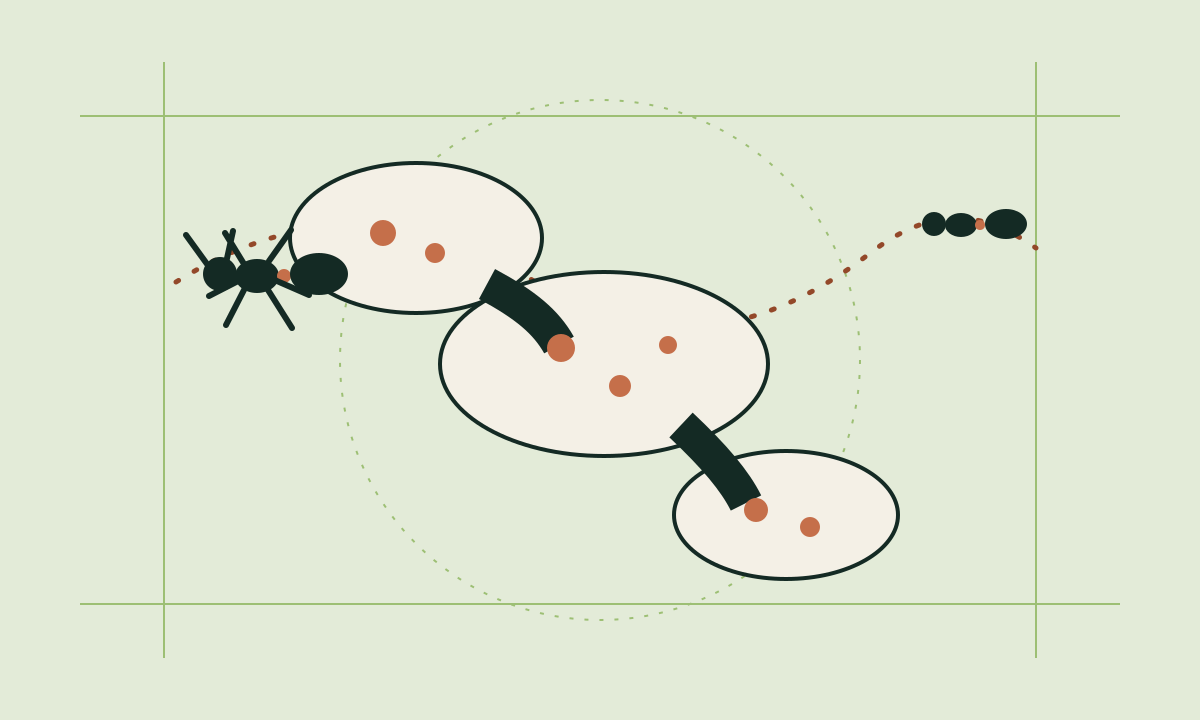
Colonies produce winged reproductives when conditions favor dispersal. After mating, a potential queen may shed her wings and begin founding; males usually have a much shorter role.
Outside and inside mean different things
A brief outdoor swarm can be a normal seasonal event. Repeated emergence from one indoor point is evidence that a colony is in or near the building and should be documented.
Compare before treating
Winged ants and termite swarmers differ in waist, antennae and wing proportions. Save an intact specimen because the management implications differ substantially.
Alates are a reproductive caste, not a species
Many ant species produce winged queens and males. Calling an insect a “flying ant” therefore describes what it is doing and which life stage it represents, not its species. The workers from the same colony may look sufficiently different that a casual observer would not connect them.
After mating, a potential queen typically sheds her wings and searches for a founding site. Males usually live for a much shorter period. A pile of wings can be evidence of the flight, but an intact insect tells you more.
Why flights synchronize
Colonies respond to seasonal and weather conditions such as temperature, humidity, recent rain and wind. When conditions align, many colonies can release reproductives over a short period. A pavement covered in swarmers may therefore reflect a regional event rather than a single enormous nest beneath it.
The spectacle is brief because the exposed insects face predators, dehydration and bad luck. For birds and spiders it can be an excellent afternoon; for a male ant, the career-development opportunities are more limited.
Location changes the interpretation
An outdoor swarm with no connection to a structure may need nothing more than observation. Repeated winged insects emerging from an indoor crack, window frame, wall or structural wood deserve documentation and identification.
Save several specimens dry, photograph the emergence point and compare them with the flying-ant-versus-termite guide. Do not spray or seal away all the evidence first. The most useful next step depends on whether the insects are ants, termites and whether their colony is actually associated with the building.
Sources and review notes
EveryAnt prioritizes peer-reviewed, university, museum and government sources. These pages have completed an internal source and scope pass; independent subject-matter review remains recommended before a production launch.
- Ants and Termites: How to Tell the Difference — University of Maryland Extension. Accessed 2026-09-05.