
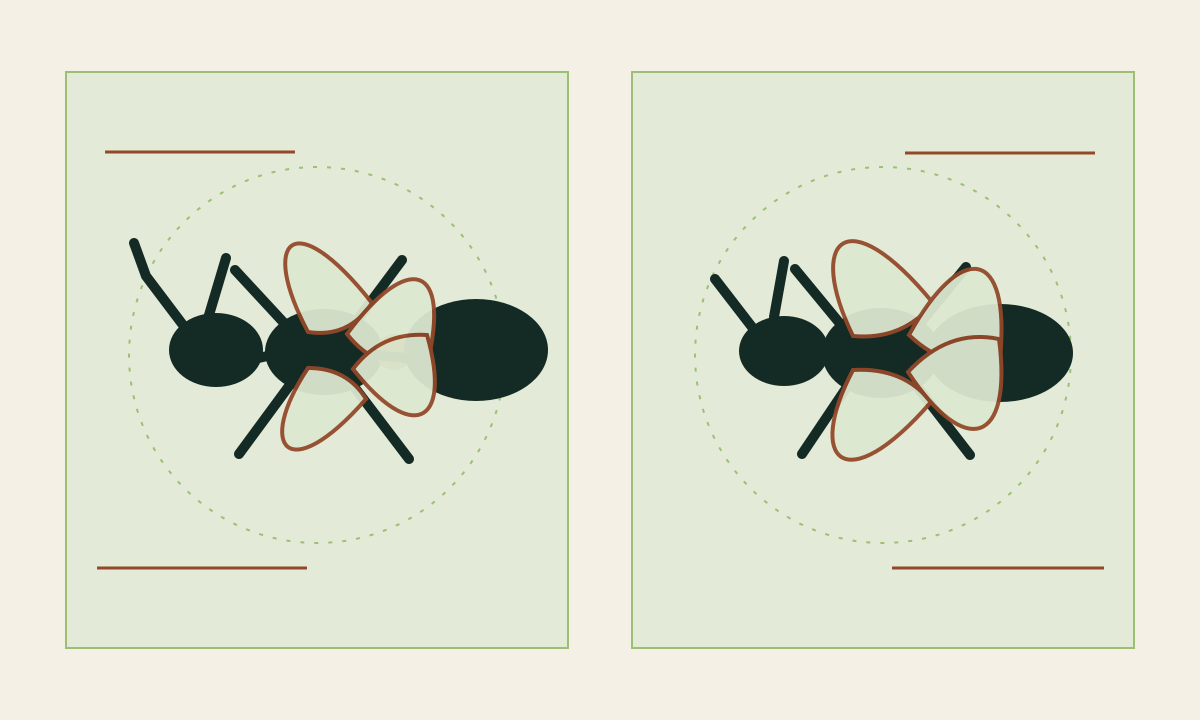
First, define “sugar ant”
Common names travel badly. In many US households, “sugar ant” simply means a small ant found at sweets. That description can include several unrelated species with different nesting habits and defensive behavior.
In Australia, the name often points to the banded sugar ant, Camponotus consobrinus, a much larger ant. An answer written for one region can therefore be misleading somewhere else.
Bite, sting or skin irritation?
Ants have mandibles and many can pinch when trapped against skin or defending a nest. Other species sting; some can also apply defensive chemicals to the skin. A person may describe any sharp sensation as a bite even when the mechanism differs.
Small sweet-feeding household ants are not automatically dangerous. Still, size and attraction to sugar do not rule out a species capable of a painful sting. Clear photographs and location are more useful than the nickname.
What a minor reaction may look like
A brief pinch, small red area or short-lived itching can follow a minor ant encounter. Wash the area with soap and water and avoid scratching. Follow ordinary first-aid guidance rather than applying an unproven household chemical.
Severe pain, spreading swelling, hives, dizziness, breathing difficulty or symptoms away from the contact site need prompt medical attention. People with a known insect-venom allergy should follow their emergency plan.
How to narrow the identification
Record the country and region, the ant’s approximate length, color, number of waist nodes if visible, where it was found and whether it arrived in a trail. Photograph the ant from above and from the side if it can be done safely.
Do not handle a live ant to test whether it bites. An extension service, museum or qualified pest professional can often work from a specimen and good contextual photographs.
Prevent contact without guessing
Clean sweet residues, store food securely, manage pet bowls and watch the trail back toward its entry point. These steps reduce the resource regardless of the species.
If ants are numerous, recurring or associated with painful reactions, identify them before treatment. The correct response for a nuisance sweet-feeding ant may be inappropriate for a stinging or colony-budding species.
The same nickname describes very different ants
In Australia, “sugar ant” commonly refers to banded sugar ants in the genus Camponotus. In North American households, the phrase is often a casual label for any small ant visiting syrup, fruit or crumbs. Search results regularly mix those meanings, which is how a reader can receive advice about a large Australian ant while looking at tiny workers beside a US sink.
Location therefore belongs at the start of the answer, not in a footnote. Country, state or province, body size and a clear image can shrink the list of possibilities. The label on a search box cannot do the taxonomic work for you, however enthusiastically it autocompletes.
Mandibles and stingers are different tools
All ants have mandibles used for carrying, feeding, nest work and defense. A sufficiently large or defensive ant may pinch skin with them. Some ant groups also have a functional sting, while formicine ants lack a sting and can use defensive chemicals in other ways.
A person may feel one sharp event and reasonably call it a bite. For identification, the distinction matters: Was the ant trapped under clothing? Did it grip the skin? Was there a separate sting? Were many ants defending a nest? Do not deliberately repeat the encounter to improve the data. The ant has already declined to participate in follow-up testing.
Risk cannot be inferred from attraction to sweets
Diet and defensive ability are separate traits. Many ants collect sugary liquids, including species that are minor indoor nuisances and species capable of painful defense. Worker size is useful context but is not a complete risk assessment either.
For a mild local reaction, ordinary cleaning and monitoring may be sufficient. Rapidly spreading symptoms, breathing difficulty, dizziness, widespread hives or a known severe insect allergy require urgent medical attention according to local guidance. This page helps clarify names; it cannot diagnose a reaction or identify venom from a skin mark.
Build an identification packet
Photograph several workers because colonies can contain different-sized workers and one damaged specimen may hide the useful features. Include a top view, a side view and a scale. Note the trail, time, food and nest setting, then preserve an intact specimen only if it can be collected without contact risk.
Useful questions include the number of waist nodes, whether the body profile is smoothly curved or uneven, and whether an odor is produced when a specimen is accidentally crushed. These are prompts for an expert or key—not encouragement to squeeze unknown ants for the sake of science.
Sources and review notes
EveryAnt prioritizes peer-reviewed, university, museum and government sources. These pages have completed an internal source and scope pass; independent subject-matter review remains recommended before a production launch.
- “Sugar” Ants — Washington State University Puyallup Research and Extension Center. Accessed 2026-09-05.
- Ants — Cornell Integrated Pest Management. Accessed 2026-09-05.