
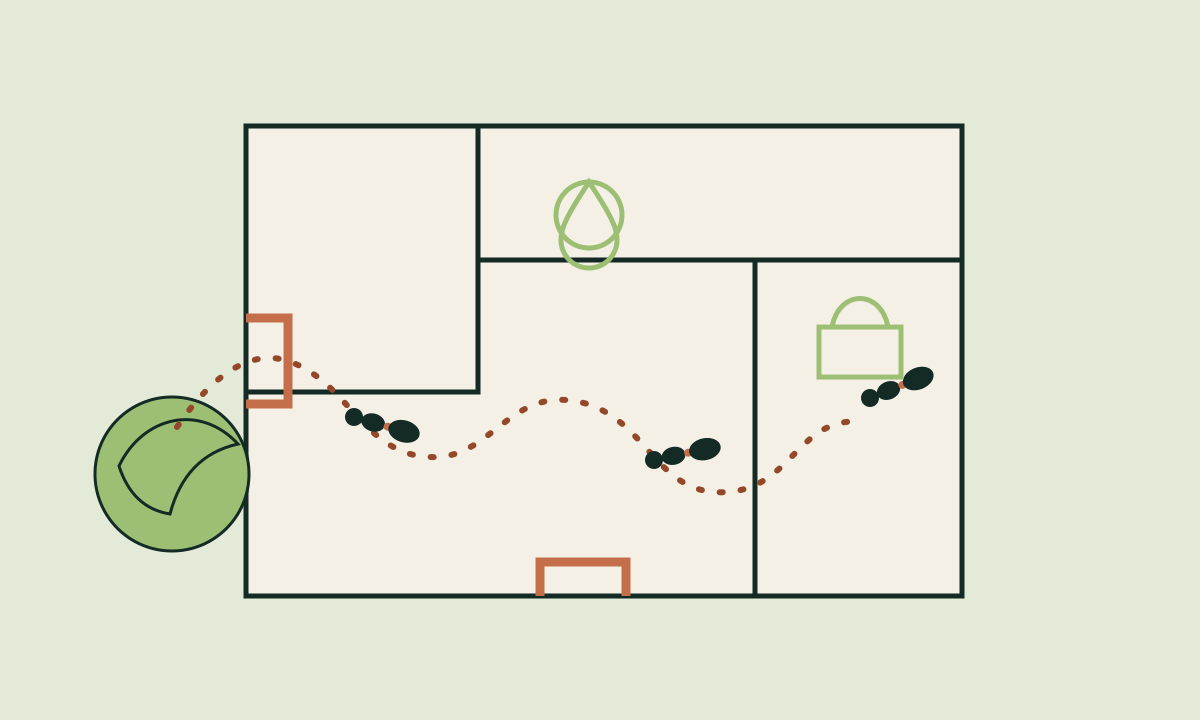
A scout finds a resource
Most indoor trails begin with foraging workers, not a whole colony marching in at once. Scouts explore. When one finds a useful resource, it can lay a chemical trail that helps nestmates return to the same place.
That is why a few unnoticed crumbs can turn into a conspicuous line of ants. It also explains why wiping up the visible workers without removing the resource often produces only a short pause.
Food preferences are not universal
Sugary liquids, ripe fruit and honeydew attract many species, while others strongly seek fats or protein at particular times. Pet bowls, recycling residue, grease behind appliances and tiny spills beneath cabinets can all feed a trail.
The name “sugar ant” can encourage an overly simple diagnosis. Food preference alone rarely identifies an ant, and a colony may change what it collects as larvae, weather and available resources change.
Water and damp wood
Leaking pipes, condensation, wet plant trays and damp structural wood can sustain ants even in a clean kitchen. Moisture is especially important in dry weather, when a building becomes a predictable water source.
Carpenter ants often use moisture-damaged or decayed wood for nesting. Their presence does not prove that the wood is structurally unsafe, but repeated large ants, frass or activity from a wall deserves closer inspection.
Shelter and access
Wall voids, insulation, hollow doors and warm appliance areas offer protected space. Outside, branches touching a roof, utility lines, cracks and poorly sealed openings can act as bridges into the building.
Weather can trigger sudden movement. Heat, heavy rain, drought or disturbance may change where ants forage or nest. A sudden trail is evidence of changed opportunity, not proof that a home became dirty overnight.
Remove the invitation methodically
Clean the trail and nearby surfaces, store food in sealed containers, empty waste regularly, manage pet food, repair leaks and trim obvious vegetation bridges. Watch where workers enter before sealing gaps so you understand whether the nest is indoors or outside.
If activity persists, identify the ant before selecting a control method. Species differ in nesting and food preferences, and some respond poorly to indiscriminate repellent sprays. Follow product labels exactly and seek a qualified professional for structural damage, difficult indoor nests, stinging species or recurring infestations.
Think in resources, routes and nest sites
A useful inspection separates three questions. What are the ants collecting? How are they reaching it? Where could the colony or satellite nest be? Solving only one can produce a temporary result. A spotless counter still attracts ants if a pipe leak supplies water, and sealing one crack merely encourages a trail to test the next gap.
This framework also avoids moralizing. Ants are not miniature restaurant inspectors handing out a cleanliness score. They exploit accessible resources. A very clean building can develop activity because of weather, structural moisture or a nest outside, while a single hidden spill can sustain a trail in an otherwise tidy kitchen.
Preferences change through the season
A colony’s nutritional demand is not fixed. Developing larvae require protein and other nutrients, while adult workers often seek carbohydrate-rich liquids for immediate energy. Food preference can shift with brood production, weather and what is available outdoors.
That is why one homemade “test bait” cannot identify an ant. Interest in sugar today does not prove a species called sugar ant, and disinterest tomorrow does not prove the colony has vanished. Observe several clues: worker size, trail pattern, time of activity, nest setting and response to changing resources.
Why killing the visible line rarely solves the system
The workers on a counter are a fraction of a colony. Removing them can reduce immediate activity, but it leaves queens, brood and most workers elsewhere. Repellent sprays may interrupt the route without affecting the source and can complicate management for species that readily split or relocate.
The better first move is information gathering. Follow traffic in both directions, note where it crosses a wall or pipe, and clean the resource after documenting it. If treatment becomes necessary, identification and a lawful label determine whether a bait, direct nest treatment, exclusion or professional plan is appropriate.
A fifteen-minute ant inspection
Start at the densest part of the trail and work outward. Use a flashlight along cabinet edges, plumbing penetrations, window frames and appliance gaps. Outside, check the corresponding wall, vegetation contacts, utility lines, mulch and obvious moisture. Do not dismantle electrical or structural components.
Write down the route before wiping it away. After cleaning, check the same places at similar times for several days. A trail that reappears at one plumbing gap tells a different story from occasional workers arriving through an open door. The goal is not to outsmart an ant in fifteen minutes; it is to replace guessing with a usable map.
- Photograph an intact worker beside a millimeter scale.
- Record food, water and moisture separately.
- Note whether workers travel both directions on a defined trail.
- Escalate stinging ants, structural evidence and persistent indoor nests.
Sources and review notes
EveryAnt prioritizes peer-reviewed, university, museum and government sources. These pages have completed an internal source and scope pass; independent subject-matter review remains recommended before a production launch.