
Observe before changing the scene
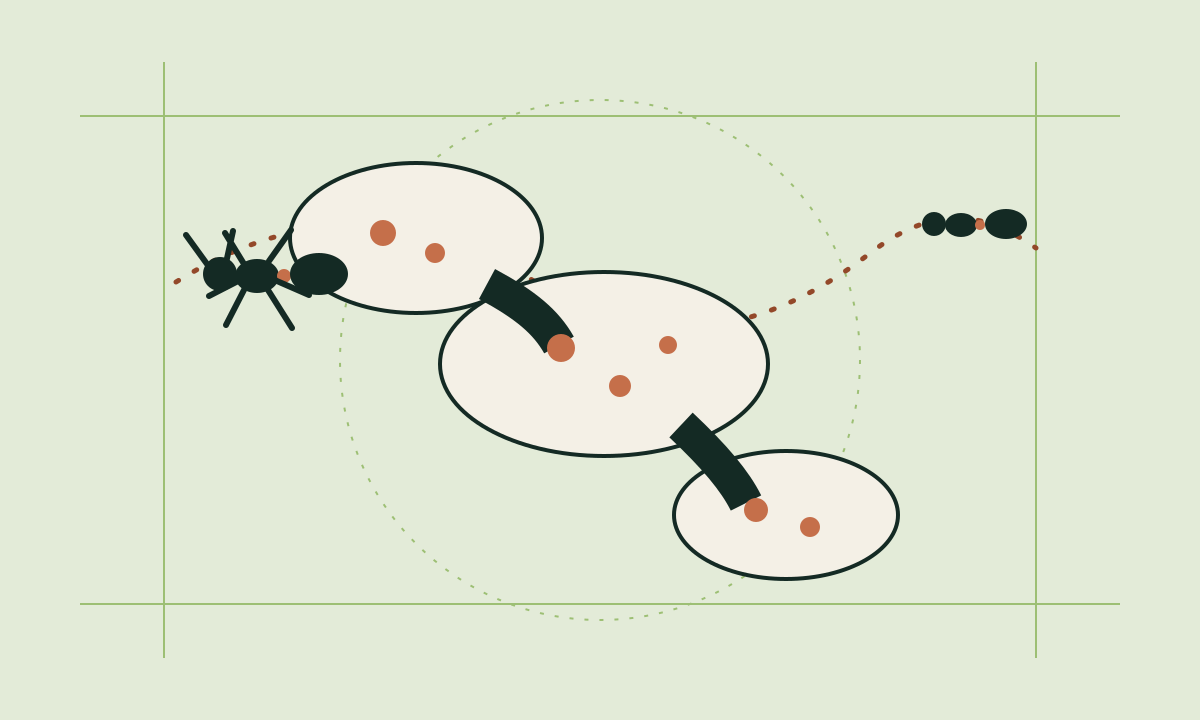
Photograph workers, note the trail and record when activity peaks. Those details help distinguish an outdoor foraging line from an indoor nest.
Remove universal resources
Clean food residue, manage pet bowls, repair leaks and store attractive foods securely. These steps are useful even before the species is known.
Match management to the ant
A repellent may only divert workers, while some colony-budding ants can spread when disturbed. Product labels and local professional guidance determine safe options.
Start with a three-part diagnosis
Identify the best-supported ant group, map the route, and identify the resource or nest condition. Those three parts interact. A correct species guess without a route may not locate the colony; perfect cleaning without moisture repair may leave the reason for nesting untouched.
Begin with observations that survive cleanup: photographs, worker size, time, direction of travel and where activity enters. Then remove accessible food and water. This sequence is slower than spraying the first moving dot and considerably better at explaining what happens next.
Prevention is mostly unglamorous—and useful
Store attractive foods securely, clean residues beneath appliances, manage pet bowls, repair leaks, trim vegetation contacts and close durable gaps after understanding the route. Outdoor honeydew-producing insects can also support ant traffic near a building.
None of this requires declaring war on every ant in the garden. The goal is to make the indoor environment less rewarding and the building less accessible while leaving ordinary outdoor ecology alone where possible.
Know when the problem has changed category
Large ants linked to damp wood, mud tubes, repeated indoor swarmers, painful stinging species and activity in electrical or inaccessible structural areas need more than routine housekeeping. Bring specimens and photographs to an extension specialist or qualified professional.
For pesticide use, the label defines the permitted sites, directions and precautions. “Natural” is not a substitute safety category. A useful control plan targets an identified problem while protecting people, animals and the building—not merely producing the strongest-smelling room on the street.
Sources and review notes
EveryAnt prioritizes peer-reviewed, university, museum and government sources. These pages have completed an internal source and scope pass; independent subject-matter review remains recommended before a production launch.