
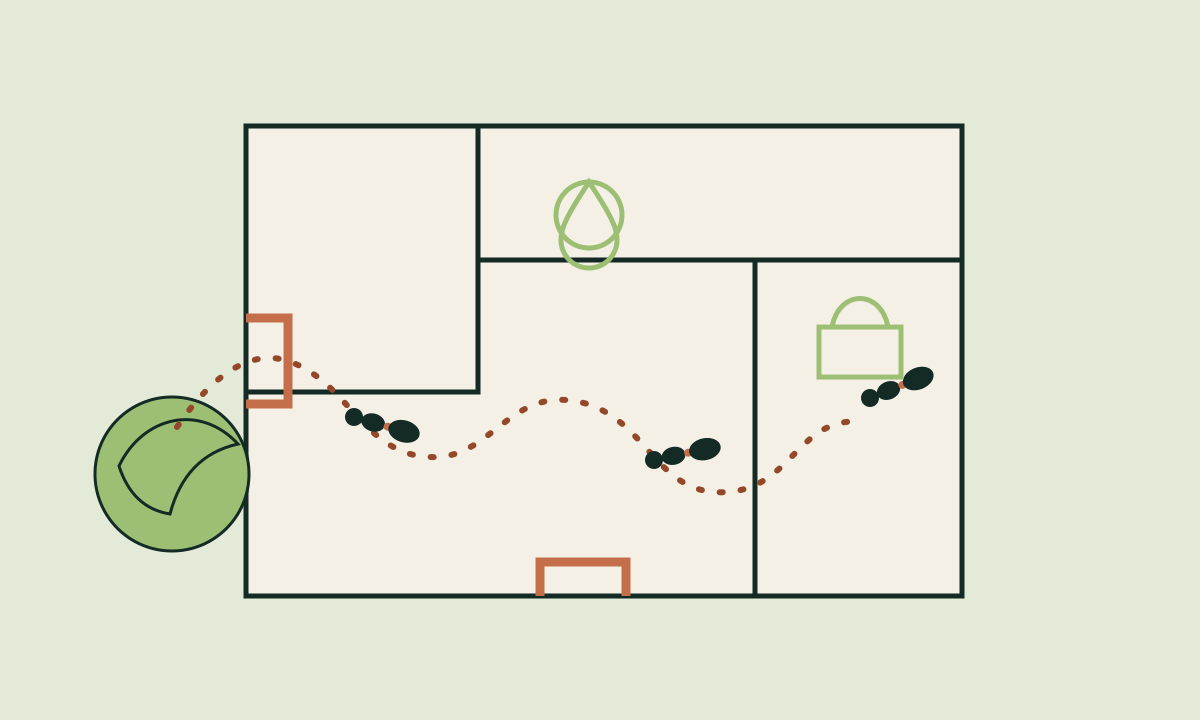
First decide: visitors or residents?
A car can intersect an outdoor foraging trail when parked beside soil, vegetation or a nest. Workers climb onto the vehicle, find a spill and recruit nestmates. Moving the car and removing the food can break that connection.
Ants that continue to emerge from the same trim, dashboard or door after the vehicle moves may be sheltering inside. Brood being carried is a stronger nesting clue than scattered workers. Record the location rather than immediately flooding it with spray.
Empty, vacuum and wash
Remove all food, wrappers, reusable bags and child-seat debris. Vacuum seat rails, seams, consoles, door pockets and the spare-wheel area. Clean sticky residues with a material-safe automotive cleaner and dry carpets and mats completely.
Pay special attention to a spilled drink that reached beneath trim or carpet. A clean-looking surface can conceal sugar below it. Do not dismantle airbags, high-voltage components or dashboard electronics without qualified service guidance.
Change the parking experiment
Park on a clean paved area away from the suspected trail for several days if practical. Photograph activity at the same times each day. A sharp decline supports the idea that workers were visiting from outside.
Inspect branches touching the vehicle and the ground around the original parking place. Treating a car cannot solve a large outdoor colony if the vehicle is repeatedly parked across its foraging route.
Be cautious with pesticides in a cabin
A vehicle is a small enclosed space that becomes hot. Never improvise with total-release foggers, powders in ventilation systems or products whose label does not permit the site. Residues can contact skin, children, pets and food, while solvents may damage interior materials.
If using any pesticide, identify the ant and follow the complete label, including placement, ventilation and re-entry directions. Remove or secure any bait so it cannot spill or be reached by a child or animal.
Escalate when the pattern persists
Ask a qualified pest professional and automotive technician for help when ants repeatedly emerge from vents or electrical housings, when you see brood inside the car, or when cleaning and relocation do not change activity.
Bring photographs and specimens. The aim is to locate the colony without contaminating the cabin or damaging wiring—not simply to kill the workers currently visible.
Why a vehicle can become useful to ants
A parked car offers shade, narrow cavities and protection from rain. Food crumbs and drink residue add predictable energy, while damp carpet, condensation or a leak can supply moisture. Warmth may make some spaces attractive temporarily, but extreme cabin heat is also hazardous; “ants like heat” is not a sufficient diagnosis.
The colony may be outside with workers visiting through a tire, branch or parking-surface contact. In other cases ants can shelter in a door, trim cavity or debris-filled recess. A car is essentially a mobile collection of crumbs, voids and weather seals. This is excellent engineering for transport and, occasionally, accidental ant hospitality.
Divide the car into inspection zones
Start with the passenger compartment: cup holders, seat rails, child-seat seams, door pockets and the edges of carpet. Continue to the cargo and spare-wheel areas, then inspect weather stripping and exterior contacts. Treat the dashboard, high-voltage system, airbags and sealed electronics as professional-service zones.
Use a flashlight and vacuum crevice tool without forcing objects beneath trim. Note exactly where workers first appear rather than following only where they end up. An ant at a cup holder may have walked from a door seal; the snack is the destination, not necessarily the nest.
- Food zone: crumbs, wrappers, sticky bottles and pet treats.
- Moisture zone: wet mats, leaks, condensation and drains.
- Entry zone: door seals, wheel wells, branches and parking surface.
- Do-not-dismantle zone: airbags, wiring, batteries and dashboard modules.
Run a forty-eight-hour relocation test
After cleaning and drying the car, park in a different paved location away from vegetation and the original ant trail. Check at consistent times for two days. A rapid decline suggests the workers were commuting from an outdoor nest. Continued emergence from one vehicle cavity makes onboard shelter more plausible.
The test is informative, not infallible. Hidden food may remain, a small group can take time to appear, and moving the car can temporarily disrupt activity. Keep a simple log with place, time, number of workers and emergence point. Four short observations beat one dramatic recollection.
Common fixes that create new problems
Do not pour liquid into gaps, dust ventilation ducts or place loose bait where it can spill beneath pedals or reach children and animals. Essential oils and solvents can affect people, pets, plastics, adhesives and finishes. Total-release foggers introduce additional exposure and ignition concerns and should never be improvised in a vehicle.
If a label does not clearly permit the vehicle and placement you intend, that product is not your plan. A professional may instead recommend treating an identified outdoor colony, using a secured labeled bait in an allowed site or opening a vehicle component safely with an automotive technician. The route to fewer ants should not pass through damaged electronics.
Sources and review notes
EveryAnt prioritizes peer-reviewed, university, museum and government sources. These pages have completed an internal source and scope pass; independent subject-matter review remains recommended before a production launch.
- Ants — University of Minnesota Extension. Accessed 2026-09-05.
- Introduction to Pesticide Labels — United States Environmental Protection Agency. Accessed 2026-09-05.