
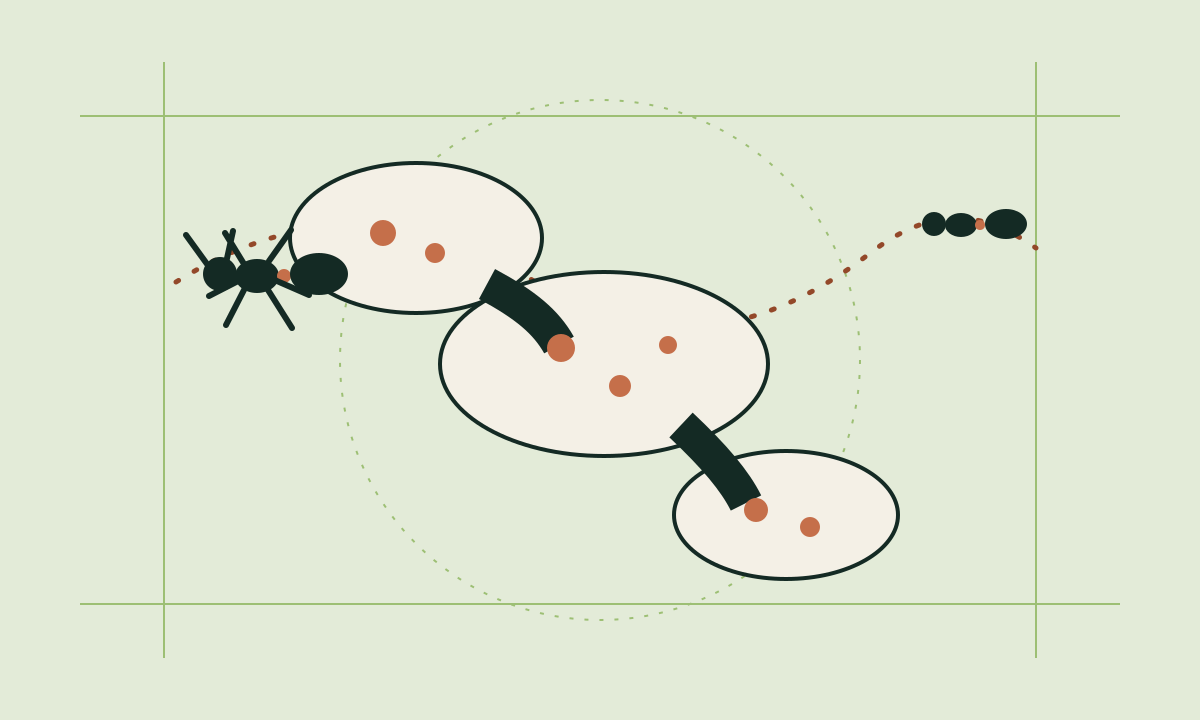
A name with two jobs
Common names can be useful locally and confusing globally. State the country, size and nesting context whenever “sugar ant” is used.
Food does not identify species
Many ants collect carbohydrates. A sweet bait response tells you about current foraging, not enough about anatomy to name the ant.
Route to the real question
Use the bite guide for contact concerns and the attraction guide for indoor resources. Future species pages should use accepted scientific names alongside regional common names.
Regional meaning comes first
In Australia, “sugar ant” commonly points toward banded sugar ants, a recognizable group of larger Camponotus. In North America, the same phrase is often applied loosely to small household ants visiting sweet food. Advice that skips geography can therefore be accurate for the writer and wrong for the reader.
Record country and region before comparing photographs. Common names are useful handles, but they are not passports: they do not cross every border with the same meaning.
Sweet food is behavior, not a name tag
Adult workers in many species seek carbohydrate-rich liquids for energy. Honeydew from sap-feeding insects is an important outdoor source, while spills, fruit and drink residue can substitute indoors. A visible preference may also change as colony needs and available food change.
An ant arriving at sugar has demonstrated that it found sugar. It has not completed a species-identification exam. Size, waist nodes, side profile, nesting place, trail pattern and a regional key provide stronger evidence.
Choose the guide that matches the concern
If the question is whether contact is medically concerning, begin with the bite guide and preserve uncertainty about the species. If the issue is a kitchen trail, begin with the attraction guide and map resources and entry routes. If the ants are large or associated with wood, move to the carpenter-ant evidence pages.
This hub remains intentionally broad so those pages can answer their own tasks in depth. One nickname should not become an excuse to combine identification, first aid and household control into a very confident bowl of internet soup.
Sources and review notes
EveryAnt prioritizes peer-reviewed, university, museum and government sources. These pages have completed an internal source and scope pass; independent subject-matter review remains recommended before a production launch.
- “Sugar” Ants — Washington State University Puyallup Research and Extension Center. Accessed 2026-09-05.