
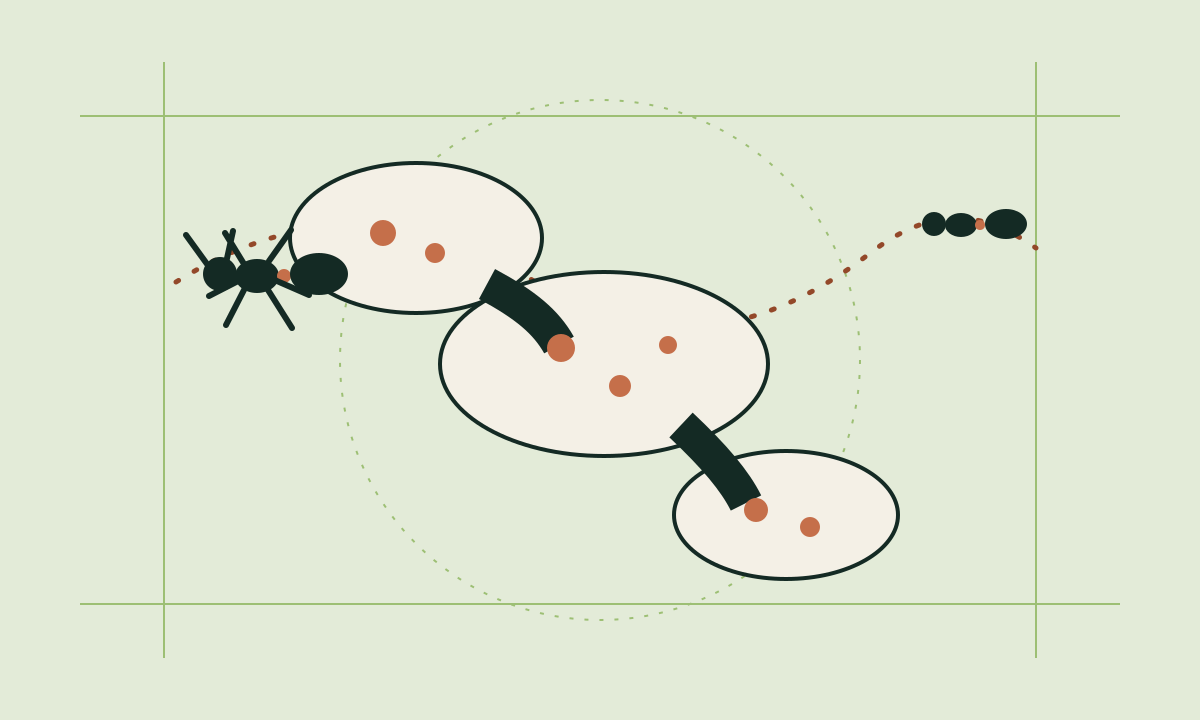
A society with many forms
The familiar worker is usually a non-reproductive female. Colonies also contain developing brood and, depending on season and species, queens and males.
Local decisions create colony behavior
Workers respond to chemical, tactile and environmental cues. Recruitment, nest cleaning and brood care emerge from many interactions rather than instructions from a commanding queen.
Variation is the rule
Colonies may hold tens or millions, occupy one cavity or many nests, and persist for a season or years. Every general rule needs room for species-level exceptions.
Queens reproduce; colonies organize
Calling the queen the colony’s leader is tempting and usually misleading. Her central role is reproduction. Workers make local decisions using chemical, tactile and environmental information, and coordinated patterns emerge from many interactions.
That distinction makes ant societies more remarkable, not less. Trails, nest moves and task allocation can function without a worker consulting headquarters. The queen has enough to do without approving every foraging request in triplicate.
Brood links today’s work to tomorrow’s colony
Eggs develop into larvae and then pupae before adults emerge. Larvae require feeding and care, while pupae may be naked or enclosed in cocoons depending on the group. Workers move brood among chambers to manage temperature, humidity and risk.
Colony nutrition therefore changes with brood. Workers often collect liquid carbohydrates for immediate energy and protein-rich prey or food that supports developing larvae. A foraging trail is part of a resource-allocation system, not simply a line of hungry adults.
Follow one process at a time
Use the colony-size guide to understand counts and nest boundaries, the corpse-removal article for social hygiene, and the food-web guide for ants as both consumers and prey. Each offers a close view of one mechanism while this hub keeps their relationships visible.
Future pages will add founding, communication, caste development and nest architecture. The organizing rule is simple: explain what is broadly true, show where species differ, and resist turning the most dramatic ant on the internet into the model for all ants.
Sources and review notes
EveryAnt prioritizes peer-reviewed, university, museum and government sources. These pages have completed an internal source and scope pass; independent subject-matter review remains recommended before a production launch.
- Ant colonies — Australian Museum. Accessed 2026-09-05.
- Quantifying the Effect of Colony Size and Food Distribution on Harvester Ant Foraging — PLOS ONE / PubMed Central. Accessed 2026-09-05.