
Taxonomy at a glance
Atta cephalotes was named by Linnaeus in 1758. It belongs to the ant family Formicidae, the subfamily Myrmicinae and the fungus-growing ant tribe Attini. Atta is one of the two familiar leaf-cutter genera; the other is Acromyrmex. The scientific name matters because “leaf-cutter ant” describes a way of life shared by many species, not one animal with a single worldwide range.
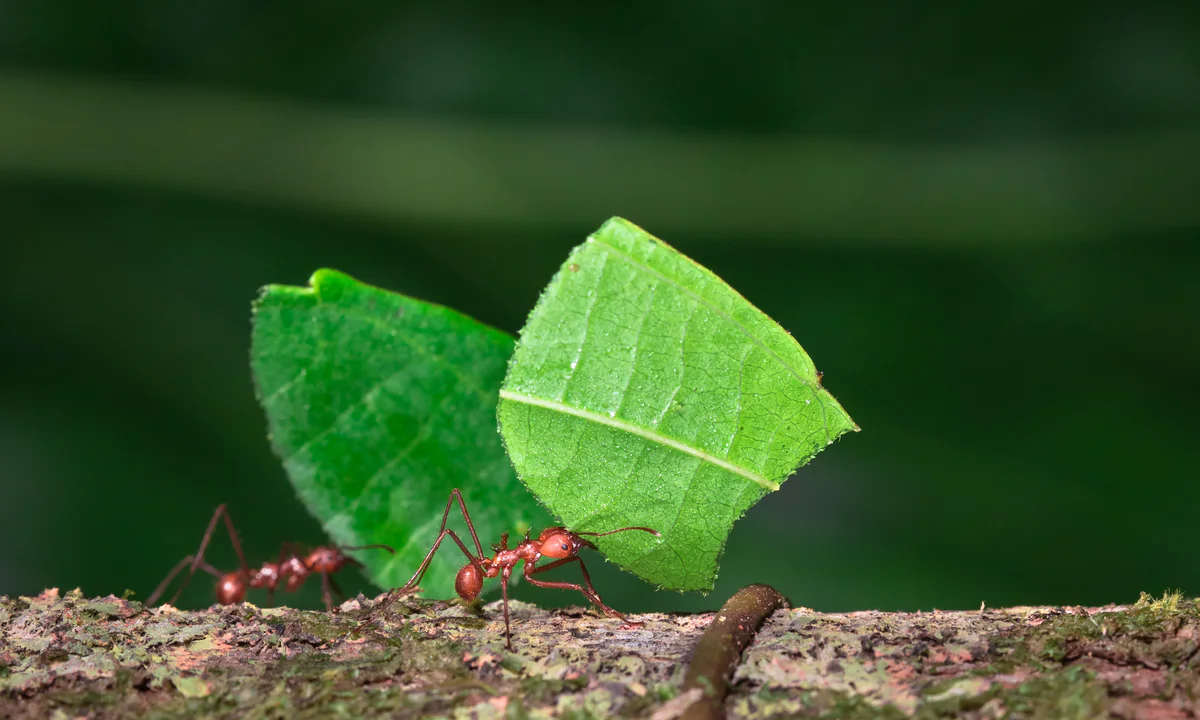
AntWeb treats Atta cephalotes as a valid species and records a long taxonomic history behind that name. For a field observer, the practical lesson is simple: begin with the genus and geography, then ask whether the available specimen preserves the features needed to go further. A common name and a green fragment held overhead are an excellent opening scene, not a completed identification.
- Family: Formicidae
- Subfamily: Myrmicinae
- Tribe: Attini
- Genus: Atta
- Species: Atta cephalotes (Linnaeus, 1758)
Range and habitat
This is the most widely distributed species of leaf-cutting ant recorded by AntWeb. Its range runs from southern Mexico through Central America and across parts of northern and central South America, with records from countries including Costa Rica, Panama, Colombia, Ecuador, Peru, Brazil and the Guianas. It also occurs on parts of the Caribbean. The range is broad, but it is not a license to attach the name to every leaf-cutter photograph from the Americas.
Atta cephalotes is associated especially with humid tropical environments and can prosper in disturbed places such as forest edges, farms and plantations. Comparative research suggests that climate tolerance and past landscape change have shaped where Atta species occur. AntWeb also notes occasional interception at United States ports; an interception is evidence of transport, not proof of an established United States population.
What identification can—and cannot—use
Workers are yellowish to reddish brown, but color is a weak field mark on its own. Size is equally slippery because one colony produces workers across a remarkable range. AntWeb distinguishes Atta cephalotes from Acromyrmex using features such as the arrangement of long spines on the upper middle body and the absence of numerous small tubercles on the body and first abdominal segment. Those are specimen-level characters, not details reliably read from a distant trail photograph.
A defensible record combines location, several views of an intact worker, a scale and comparison with identified reference specimens. Photographs should show the head, side profile, waist and upper body without crushing or rearranging the ant. When those details are missing, “leaf-cutter ant” or “Atta species” may be the honest stopping point. Precision is useful only when the evidence has earned it.
One colony, many worker sizes
Atta cephalotes is strongly polymorphic: adult workers differ substantially in size and form even though they belong to the same species and colony. A genome study reports worker head widths spanning roughly 0.6 to 4.5 millimeters. Head width is not body length, but the range makes the contrast between the smallest garden workers and the largest soldiers clear.
Size is connected to work. Small workers tend brood, handle delicate fungal growth and process plant material inside the nest. Larger workers cut and transport vegetation, while the largest workers contribute especially to defense and excavation. These are patterns rather than a row of rigid job titles. Colony work emerges from worker size, age, local need and the cues each ant encounters.
The leaves feed a farm
The famous leaf fragments are agricultural inputs. Foragers cut suitable plant material, carry it to the nest and pass it into an underground processing chain. Workers clean and reduce the material, incorporate it into a garden and tend a specialized fungus. The cultivated fungus, rather than an intact leaf, supplies the colony’s central nutritional resource.
This relationship is obligate: ant and fungal partner depend on a tightly integrated system of cultivation, feeding and garden care. Genomic evidence shows that Atta cephalotes has lost some capacities associated with obtaining particular nutrients, consistent with reliance on its fungal crop. Calling the ants farmers is therefore more than a metaphor, although their fields are dark chambers and the harvest would disappoint anyone expecting mushrooms for dinner.
For the wider distinction between grass blades, seeds, fungus cultivation and lawn nesting, see Do ants eat grass?. That guide uses other ant examples and does not imply that every leafcutter harvests the same plants.
A colony changes the landscape
Mature Atta colonies can support enormous worker populations and extensive underground nests. Published figures for the genus include millions of workers and hundreds of kilograms of dry plant material collected in a year, but those are not default measurements for every Atta cephalotes nest. Colony age, habitat and resources determine the scale, and visible trail traffic is not a census.
By moving vegetation and soil, leaf-cutters alter nutrient flow, create patches of disturbance and influence which plants grow near their nests. The same appetite can make them important agricultural pests where trails reach crops, citrus, coffee, cocoa or ornamental plants. Ecological importance and economic conflict are two views of the same activity: a large society gathering substrate for its fungus garden.
Observe the system, not only the carrier
A useful field observation records more than one photogenic worker. Note the country and habitat, time, weather, trail width, direction of loaded and unloaded traffic, the plants being cut and whether the nest entrance is visible. Photograph without blocking the trail or opening the nest. Repeated observations from the same position can reveal changes that one dramatic image cannot.
Do not move workers, queens, fungus or plant material between sites. Transport can harm the colony, spread organisms and cross rules that vary by jurisdiction. If a precise identification matters, preserve the location data and consult a regional collection, museum or ant specialist. The best species record is not the one with the boldest caption; it is the one another observer can check.
Sources and review notes
EveryAnt prioritizes peer-reviewed, university, museum and government sources. These pages have completed an internal source and scope pass; independent subject-matter review remains recommended where the subject demands it.
- Atta cephalotes (Linnaeus, 1758) — AntWeb / California Academy of Sciences. Accessed 2026-09-06.
- The Genome Sequence of the Leaf-Cutter Ant Atta cephalotes Reveals Insights into Its Obligate Symbiotic Lifestyle — PLOS Genetics / PubMed Central. Accessed 2026-09-06.
- Paleodistributions and Comparative Molecular Phylogeography of Leafcutter Ants (Atta spp.) Provide New Insight into the Origins of Amazonian Diversity — PLOS ONE / PubMed Central. Accessed 2026-09-06.