
Observation or long-term keeping?
Worker-only kits offer a bounded activity because workers cannot found a lasting colony. A colony with a queen can grow for years and needs expansion, feeding and species-specific seasonal care.
Start with legality and identification
Rules for collecting, buying and transporting live ants differ by place. Never release purchased ants, and do not move a colony across regions without checking the law.
Welfare is part of product quality
Hydration, ventilation, darkness, suitable space and secure feeding matter more than novelty materials. A transparent nest should also provide a cover so ants can retreat from constant light.
The enclosure has two different jobs
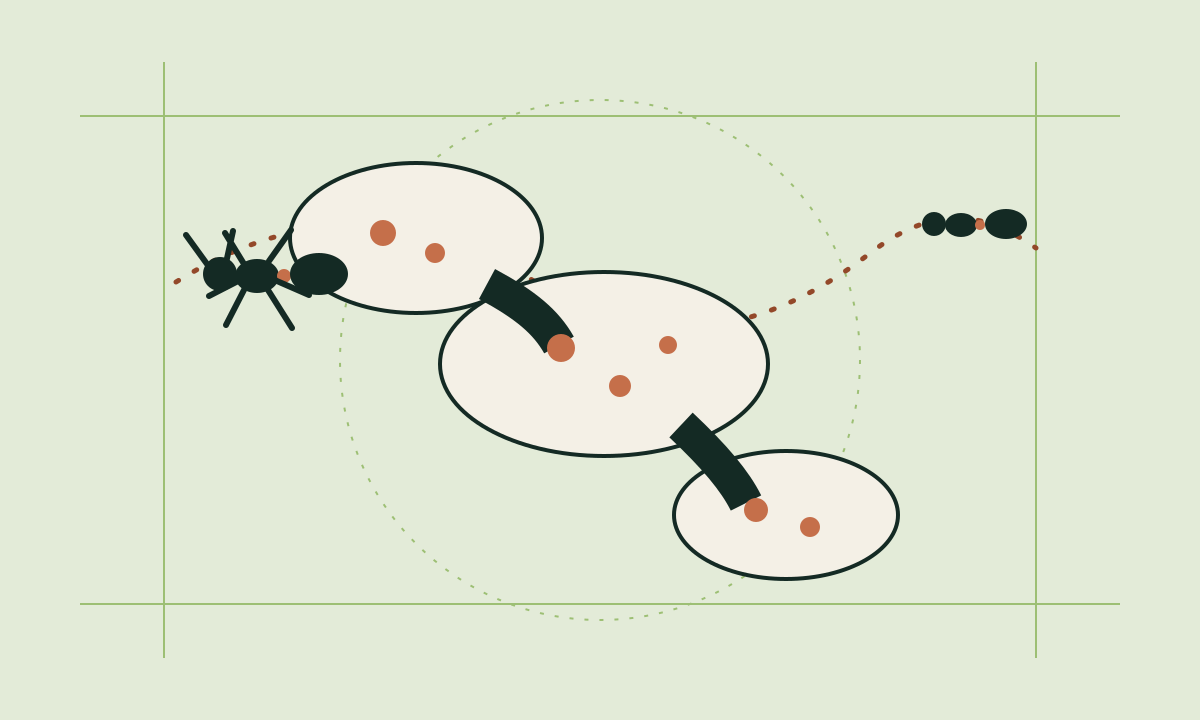
The nest provides protected chambers with appropriate moisture and darkness. The foraging arena is the accessible space where food is offered, waste is removed and activity can be observed. Connecting them allows routine care without opening the occupied nest.
A good design makes those functions legible. If feeding requires dismantling the nest or hydration requires guessing through opaque plastic, the daily routine will be difficult regardless of how handsome the product looked while empty.
Match the system to a named species
Worker size affects escape risk, while nesting biology, humidity, diet, colony growth and seasonal dormancy shape care. “Suitable for ants” is therefore too broad to be meaningful. The seller or keeper should know the scientific name and origin of the colony.
Do not combine ants from unrelated colonies or collect a random mixture from a trail. Workers recognize colony-specific chemical cues, and a handful of workers without a queen is a short observation group rather than the beginning of a permanent society.
Keeping also means planning for growth and absence
A queenright colony can outgrow its first nest. Expansion ports, compatible modules and a safe moving procedure matter long before the chambers look crowded. Daily hydration and food checks also need a named human when the usual keeper travels or a classroom closes.
Build an end-of-life plan as well. Purchased or transported ants must never be released, and rules for movement differ by jurisdiction. In the United States, USDA APHIS regulates interstate movement of all ant species and requires the applicable authorization. Check current federal and state guidance for the exact shipment.
Begin with observation, not equipment collecting
The ant-farm-kit guide explains formats, hydration, ventilation, containment and the evidence a future product comparison must record. It does not rank untested products. A more expensive habitat is not automatically more suitable, and a glowing review is not husbandry data.
Before buying, spend time observing local ants outdoors and learning how colonies use trails, nest entrances and changing food. Curiosity is the essential piece of equipment. Conveniently, it has excellent ventilation and almost no escape gap.
Sources and review notes
EveryAnt prioritizes peer-reviewed, university, museum and government sources. These pages have completed an internal source and scope pass; independent subject-matter review remains recommended before a production launch.
- Ant Farm Activity Packet — Arizona State University Ask A Biologist. Accessed 2026-09-05.
- Invertebrate Pets — USDA Animal and Plant Health Inspection Service. Accessed 2026-09-05.